Subscribe to our Erlang Factory newsletter to receive the latest updates and news


Give me a break from Erlang

Speaker
Host: Michal Slaski
Date: 11-06-2010
Room: Recorders Room
Perhaps your use of Erlang has made you curious about other functional programming languages? Perhaps you are faced with having to understand and interface with other languages in your work? Or perhaps you just want to learn something new? This track lets you widen your horizons and delve into things non-Erlang.


Time Talk
9:55 - 10:45 Actors and Vectors: Meeting Half Way On The Bridge to Pure FP. Confessions of an Object"holic"
Dave Thomas
11:15 - 12:05 What the Erlang programmer needs to know about F#
Don Syme
12:10 - 13:00 Building a Commercial Consortium
Duncan Coutts
14:25 - 15:15 Computation Abstraction: Going beyond programming language control syntax, or what we’ve missed from FP for so long in mainstream
Sadek Drobi
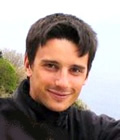
15:20 - 16:10 Contributing to Erlang: Making the most of Git and GitHub
Tom Preston-Werner


10-06-2010, Thursday
Erlang in Databases, host: Kevin Smith

Ever since Mnesia entered the scene in 1995, Erlang has been a language for the most discriminating database hackers. With CouchDB, Scalaris and Riak, Erlang is now on the forefront of the NoSQL wave - the biggest revolution in the database world since E.F. Codd invented the Relational Model.

10-06-2010, Thursday
Case Studies, host: Thomas Arts

As Erlang's popularity grows, it keeps breaking into new niches and companies not previously associated with the language. In this track we get to listen to the experiences of users better known for their association with other technologies rather than Erlang.

10-06-2010, Thursday
Erlang and Test-Driven Development, host: Hans Nilsson

Erlang-based test automation has been used in commercial products - not least Erlang/OTP itself - for more than a decade, and research on Erlang and model checking has gone on for almost as long. This track covers test-driven development ranging from hands-on practical industrial experience to the latest news from the research front.

11-06-2010, Friday
Cool Tools and Gadgets, host: Adam Lindberg

The Tools and Gadgets Track explores the latest tools, academic research projects and library applications for the Erlang Developers and Testers.

11-06-2010, Friday
Erlang and the VM, host: Ulf Wiger

Fueled by the new and more open development model for Erlang/OTP, there is increasing activity to extend Erlang into new application areas, new hardware configurations, and new language environments. This track presents some of these extensions, and discusses how to manage the evolution of the language.

11-06-2010, Friday
Give me a break from Erlang, host: Michal Slaski

Perhaps your use of Erlang has made you curious about other functional programming languages? Perhaps you are faced with having to understand and interface with other languages in your work? Or perhaps you just want to learn something new? This track lets you widen your horizons and delve into things non-Erlang.

Robert Virding teaches OTP Express Course on 10-13 June 2013

As a co-inventor of Erlang, Robert Virding is probably one of the best persons in the world to teach you all you need to know about Behaviours. It's a bit like getting piano lessons from Bach.
So we're extremly thrilled to announce that this year Robert Virding will be teaching this year's OTP Express course starting on 10 June. What will you learn?
• Use existing Design Patterns supported by Erlang and OTP.
• Apply Generic Behaviours, Finite State Machines and Event handler Patterns.
• Use the Supervisor and Application Behaviours Patterns.
• Write your own Design Patterns.
• Structure large Erlang based systems.
Hurry up and register here

As a co-inventor of Erlang, Robert Virding is probably one of the best persons in the world to teach you all you need to know about Behaviours. It's a bit like getting piano lessons from Bach.

So we're extremly thrilled to announce that this year Robert Virding will be teaching this year's OTP Express course starting on 10 June. What will you learn?

• Use existing Design Patterns supported by Erlang and OTP.

• Apply Generic Behaviours, Finite State Machines and Event handler Patterns.

• Use the Supervisor and Application Behaviours Patterns.

• Write your own Design Patterns.

• Structure large Erlang based systems.

To register for the course, go here